
V for VICTORY: the secret art of successful transformation.

Machiavelli coming along with Moses
The 11 of October 2026
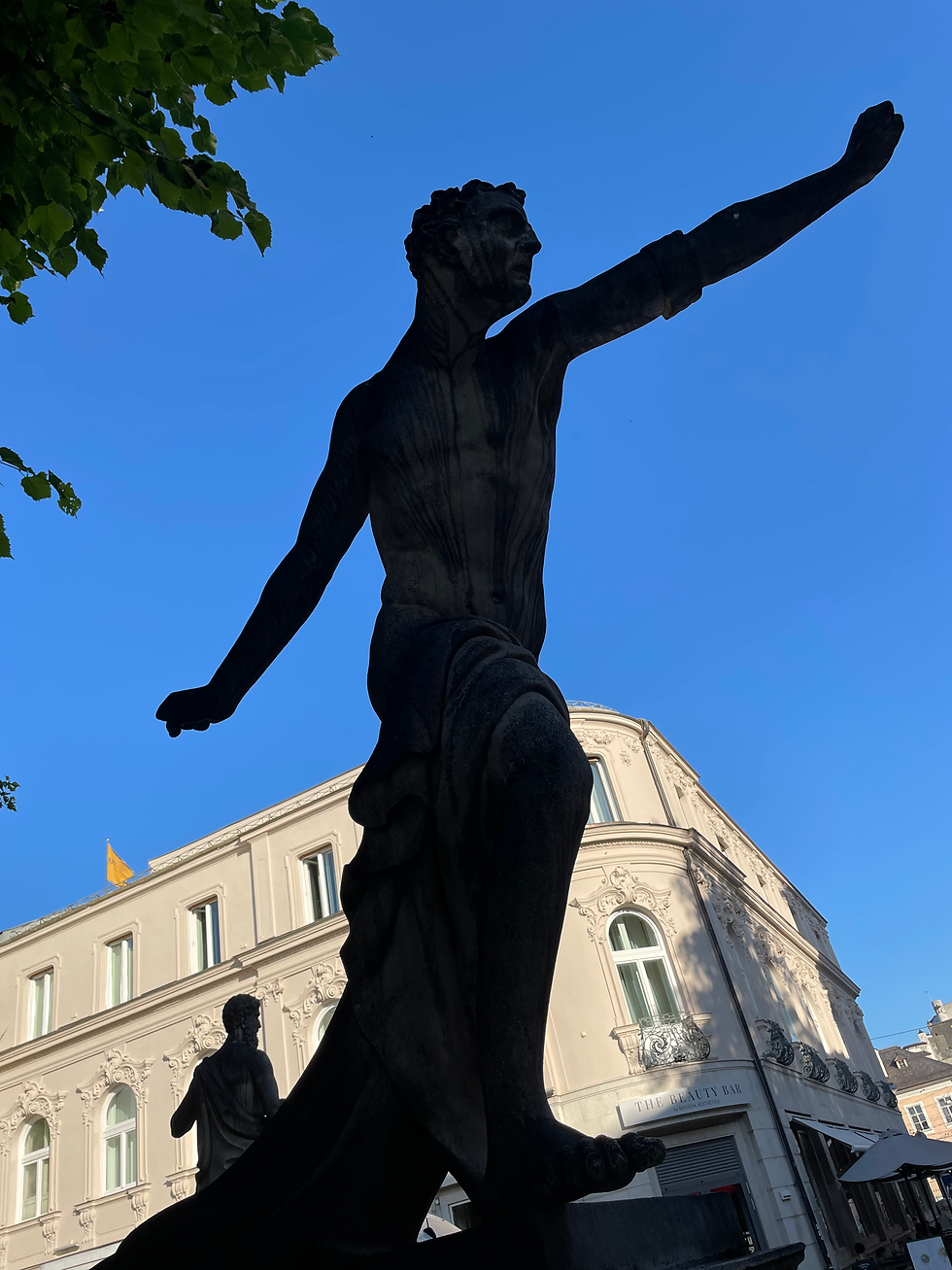
Victory is rarely mentioned in discussions about transformation. Instead, we talk about performance, accountability, and the degree of adherence to the initial plan. Yet, victory is the ultimate goal of transformation. Not an evaluation, not a quantifiable result, not a balance sheet. For STAV, victory is the logical outcome of strategy implementation. It is the realization of the impetus provided by leadership.
How to translate a vision into victory?
Every transformation begins with a clear vision. The leader must be able to share their vision of the future and make the benefits of the transformation tangible, even though these benefits may vary considerably for each of the groups involved. Contemporary scientific literature is fairly unanimous on this point (Ben Rehouma, 2019; Procaccino & Verner, 2006; Standing et al., 2006).
Furthermore, vision and victory are two distinct realities. Vision is a projection, a mental image of what the organization aspires to become. It serves to guide, inspire, align, and give meaning to collective effort. It belongs to the leader, who must be able to formulate it even before the conditions for its realization are met. Victory, on the other hand, is not an intention, but an achieved state: it is the transformation accomplished, consolidated, visible, and recognized by the organization and those who benefit from it. Vision is personal; victory is collective. Vision describes a desired future; victory is that future made real. In STAV, vision guides strategy, but victory brings it to fruition.
How do we recognize a victory?
Victory is easy to understand because we feel it. Vision fills us with inspiration. Victory makes us proud of the journey we've taken, of what we've accomplished. The path from vision to victory involves the clear conviction that we are on the right track and that we will succeed: " (...) confidence almost always leads to victory" (Walker, FLJ [Ed.], 1992), as Machiavelli so aptly put it.
Once the initial impetus is given, the path to victory is built by arranging the relevant resources and by a force that will set the strategy in motion, that will support the will to continue.
What if the obstacles multiply?
We often talk about obstacles in a negative way. We'd all be much better off in a space free of controversy or situations where we have to double our efforts to correct mistakes by Monday… But… let's remember a time in our lives when we succeeded. We found a solution, we unlocked a door. Remember that feeling of pride? That's the taste of victory. We feel it from within. Let's be honest, we can't experience it without encountering obstacles.
Moses story
Perseverance is key. The ability to maintain momentum, to persevere even when results are slow in coming. In an organization, perseverance is evident in the consistency of the message, the coherence of decisions, and the allocation of resources that contribute to victory. Perseverance rests on a clear-sighted understanding of reality, a nuanced grasp of human dynamics, and a strong inner conviction that victory is always attainable. Providing the means, the knowledge, the time, and the support creates the conditions for victory and sustains belief. Without belief, don't even attempt the journey. Isn't it telling that neither the Romans nor the populations they fought against " would ever set forth on an expedition until they had convinced the troops that the gods had promised them victory " (Walker, FLJ (Ed.), 1992)?
However, there is a nuance. Transformational processes are long and exhausting. The visionary may abandon ship for all sorts of reasons before victory. Moses is the perfect example: he carries the vision with conviction, maintains the momentum…but does not see the Promised Land. Guidance, support, clarification, mediation, and recognition are ways to share the conviction. If one is convinced and feels supported during the long journey, one can overcome the inevitable desire to give up and return to Pharaoh's rule, because the vision may be external, but victory is felt from within.
STAV
At STAV, we firmly believe that victory isn't just a buzzword. It means accomplishment whose effects are felt both objectively and internally: someone's life has tangibly improved, we've got wiser, and still keeping our spirits high. A victory can be attainable through a subtle art of inspiration coming from strategy, a perseverance forged by transformation, and advising that strengthens conviction.
Biblliography
1. Ben Rehouma, M. (2019). Employees' Participation in IT-Projects in the Public Sector: Mapping Participation to the Project Lifecycle. International Journal of Public Administration in the Digital Age (IJPADA) , 6 (2), 20-34. https://doi.org/10.4018/IJPADA.2019040102
2. Procaccino, J.D., & Verner, J.M. (2006). Software project managers and project success: An exploratory study. Journal of Systems and Software , 79 (11), 1541–1551. https://doi.org/10.1016/j.jss.2006.01.010
3. Standing, C., Guilfoyle, A., Lin, C., & Love, PED (2006). The attribution of success and failure in IT projects. Industrial Management & Data Systems , 106 (8), 1148-1165. https://doi.org/10.1108/02635570610710809
4. Walker, F.L.J. (Ed.). (1992). The Discourses of Niccolo Machiavelli (1st ed.). Routledge. https://doi-org.acces.bibl.ulaval.ca/10.4324/9781315002606
To quote:
Klimenko, Y. (2026, October, 11). V for Victory: The Secret Art of Successful Transformation. Machiavelli in the Arms of Moses. STAV Consulting Services https://www.stavsc.ca/post/v-comme-victoire-l-art-secret-de-la-transformation-réussie


Comments